
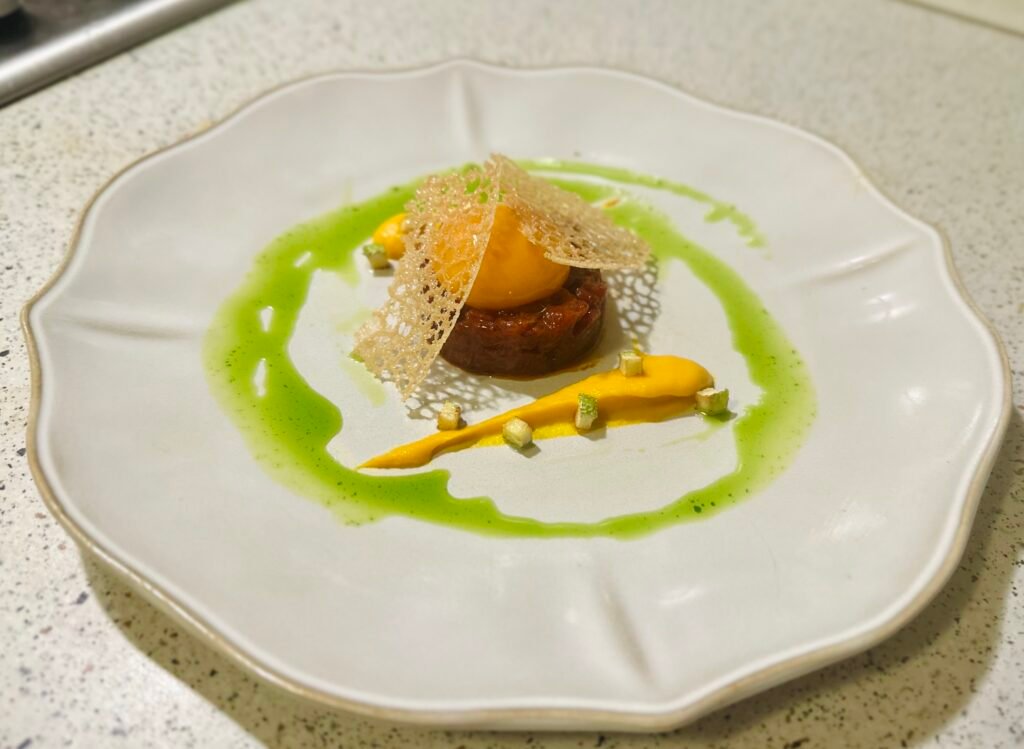
Bibimbap is a traditional Korean dish made by combining rice, vegetables such as spinach and zucchini, meat, and often egg with gochujang and sesame oil. In this creative dish, I deconstructed these traditional components and reinterpreted them in a fine dining style. The beef is presented as a tartare, while the rice is transformed into a coral tuile, carrot into a purée, spinach into green oil, zucchini into small diced pieces, and the egg into a low-temperature egg yolk confit. Through different cooking techniques, textures, and presentations, I aimed to preserve the familiar flavors of bibimbap while creating a more unique and contemporary interpretation.
Spinach Green Oil
| 35g | Spinach Leaves |
|---|---|
| 85g | Neutral Oil |
Blanch the spinach leaves for 15 seconds in boiling water, then transfer into cold water right away. Then, squeeze out excess water from it. After, put blanched spinach and neutral oil into blender and blend it for 2 minutes. Let it through the fine sieve, then set it aside until use.
Carrot Puree
| 300g | Carrot |
|---|---|
| 30g | Onion |
| 15g | Butter |
| 2g | Salt |
| 3g | Sesame Oil |
| 1g | Xanthan Gum |
Cut the carrot and onion into small chunks and slices. On the pot, add drizzle of oil and lightly sauté the vegetables for 1 minute. Then, pour 700 g of water and boil it for 10 minutes. After, blend it until smooth. When it becomes smooth, and salt, butter, sesame oil, and xanthan gum and blend it again. I used sesame oil to give some aroma of korean food.
Egg Yolk Confit
| 40g (2) | Egg Yolk |
|---|---|
| Neutral Oil |